
Parenting tips
How to Choose Educational Posters by Your Child's Age (0–3, 3–5, 5–8, 8+)
A simple age-by-age guide to choosing educational posters and learning charts for kids – from first words and colours to India maps for school projects.
Children change quickly, so the "best" poster is simply the one that fits where your child is right now. A chart that delights a two-year-old will bore a seven-year-old, and a detailed map will overwhelm a toddler. Use the stages below as starting points, not rules – you know your child best.
Ages 0–3: look, point and name
Toddlers learn a lot by pointing at things and hearing you name them. At this age, choose posters with:
- One big, clear picture per item – an apple, a cat, a red circle.
- Simple labels in large letters, so the word sits next to the picture.
- Bright, high-contrast colours that are easy to tell apart.
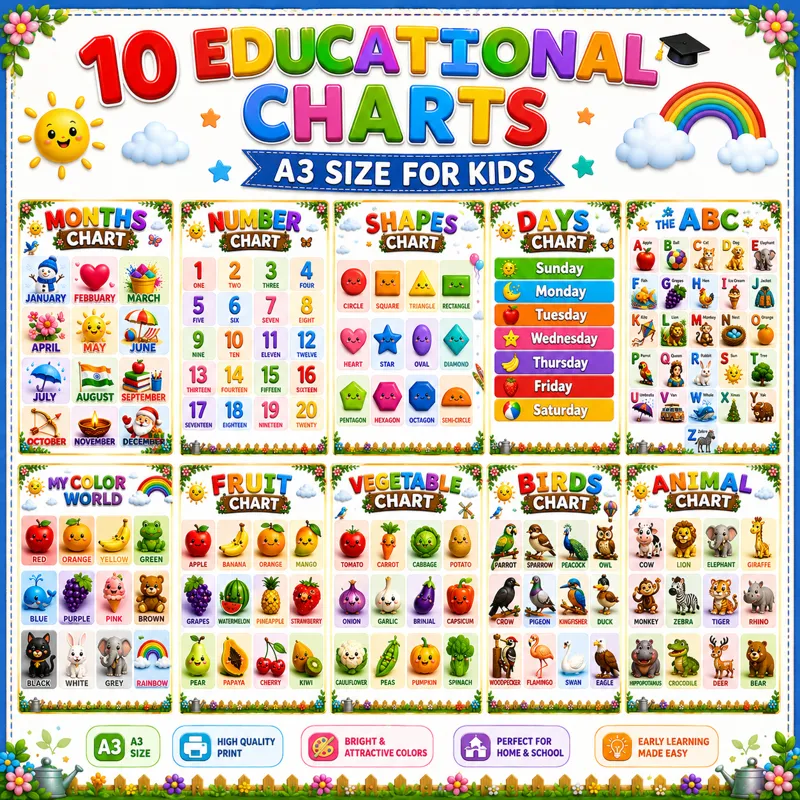
Hang the poster low, at their eye level, close to where they play. Keep it short and playful: "Where is the elephant?" is a game, not a lesson. Our Ages 0–3 picks include the My First Learning Charts set.
Ages 3–5: letters, numbers, lines and shapes
Preschoolers begin recognising letters and numbers and start pre-writing – drawing standing, sleeping and slanting lines before real letters. Helpful choices:
- Alphabet and number charts (English, and Hindi varnamala if you speak Hindi at home).
- Colour and shape charts to build vocabulary.
- Tracing sheets that can be wiped and reused, so practice stays pressure-free.
The Kids Learning Charts set (ABC, Numbers, Colors, Hindi) and the reusable Preschool Tracing Worksheets fit this stage well.
Ages 5–8: the world around them
School-age children become curious about places, festivals, food and how things work. This is a great age for:
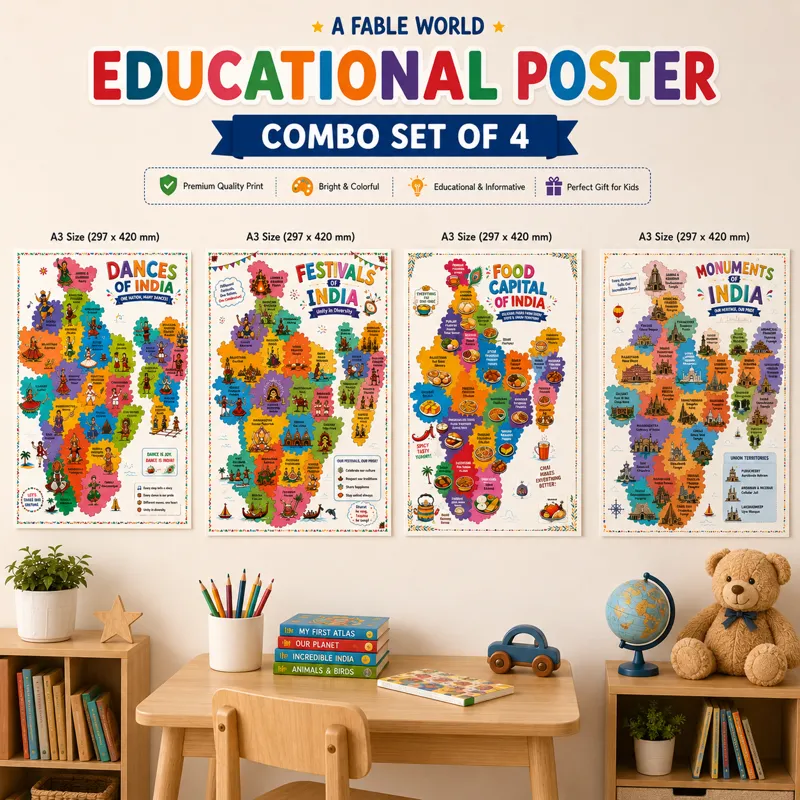
- India map posters that link each state with its dances, festivals, foods and monuments.
- Science-style charts – the human body, fruits and vegetables, animals.
- Story and value posters they can talk about with you.
Try the India Maps Learning Posters set or browse Ages 5–8.
Ages 8+: projects and deeper detail
Older children can handle more detail and often need posters for school projects, quizzes and revision. Detailed, state-wise India posters work well on a study wall, and a monthly habit tracker can help them build routines. See Ages 8+.
A few tips for every age
- Fewer is better. Two or three posters at a time get more attention than a crowded wall.
- Rotate every few weeks so the wall feels new again.
- Talk about them. A poster becomes a learning tool when you ask questions together.
- Pick the right size. A3 (297 × 420 mm) is easy to read from across a room; A4 suits small spaces and study desks.
Shop this article
Posters mentioned
Shop all →23% offMy First Learning Charts – Set of 10 A3 Educational Posters
Ages 0-3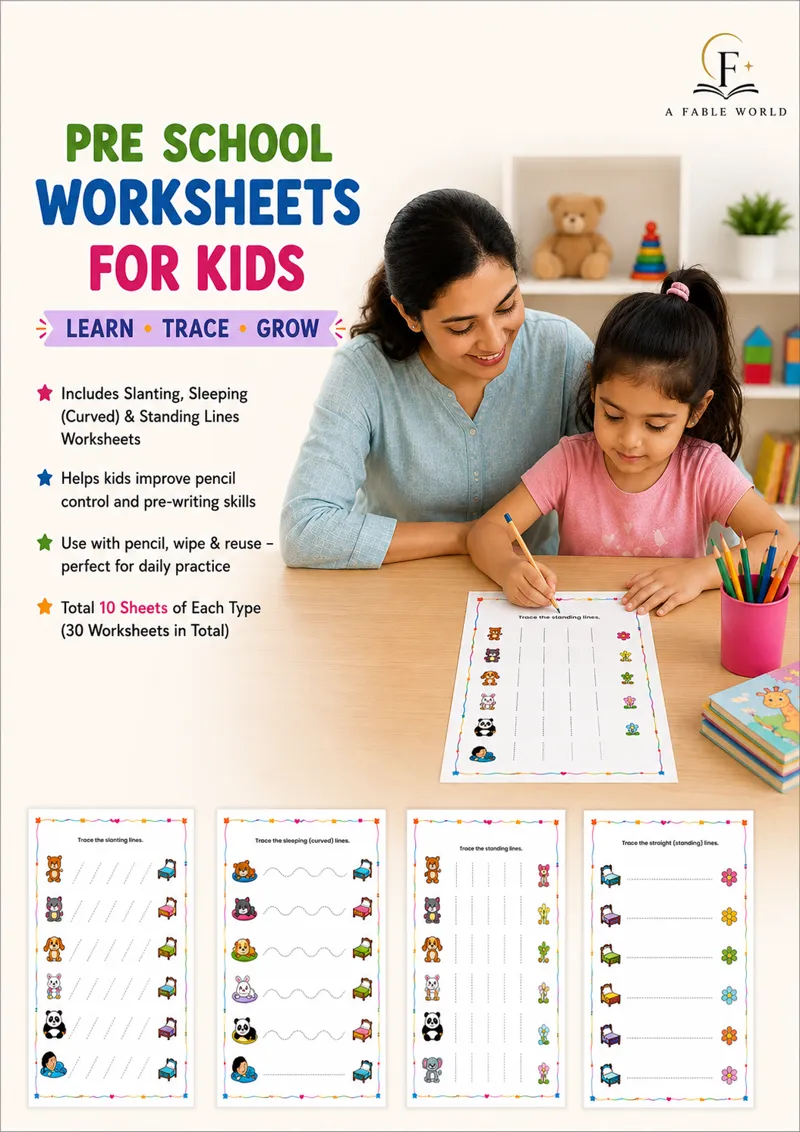 15% off
Preschool Tracing Worksheets – 40 Reusable Pre-Writing Sheets (Ages 2–5)
Ages 0-3, 3-5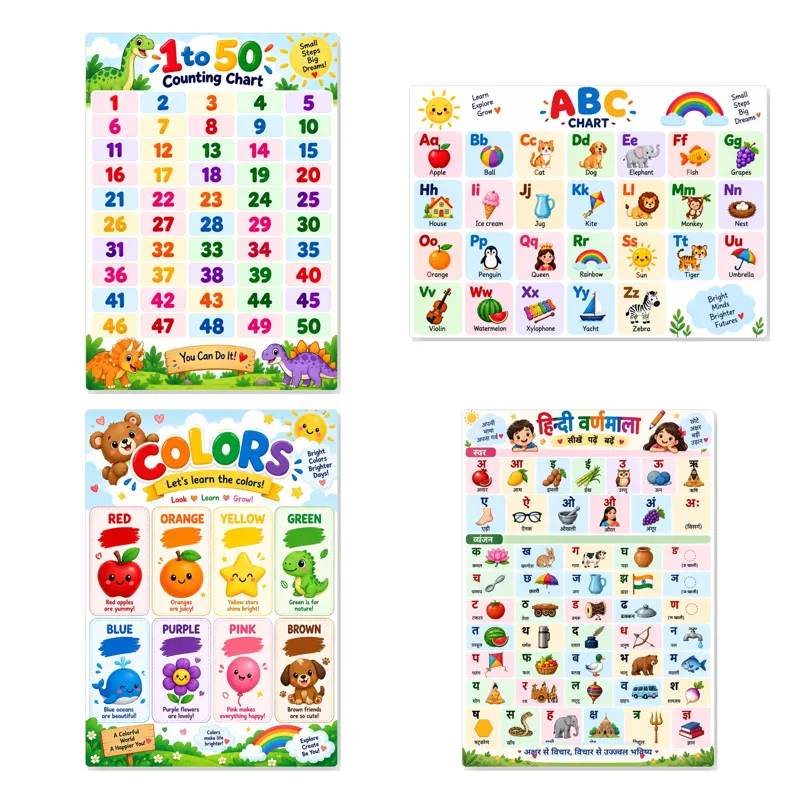 25% off
Kids Learning Charts – A3 Set of 4 (ABC, Numbers, Colors, Hindi)
 20% off
India Maps Learning Posters – Set of 4 A3 (Dances, Festivals, Food, Monuments)
Ages 3-5, 5-8, 8+Keep reading
Related articles
All articles →Buying guidesBest Educational Charts for Kids in India: A Parent's Guide
How to pick educational wall charts for kids in India – what to look for in size, print and topics, plus where to put them at home.
Read article →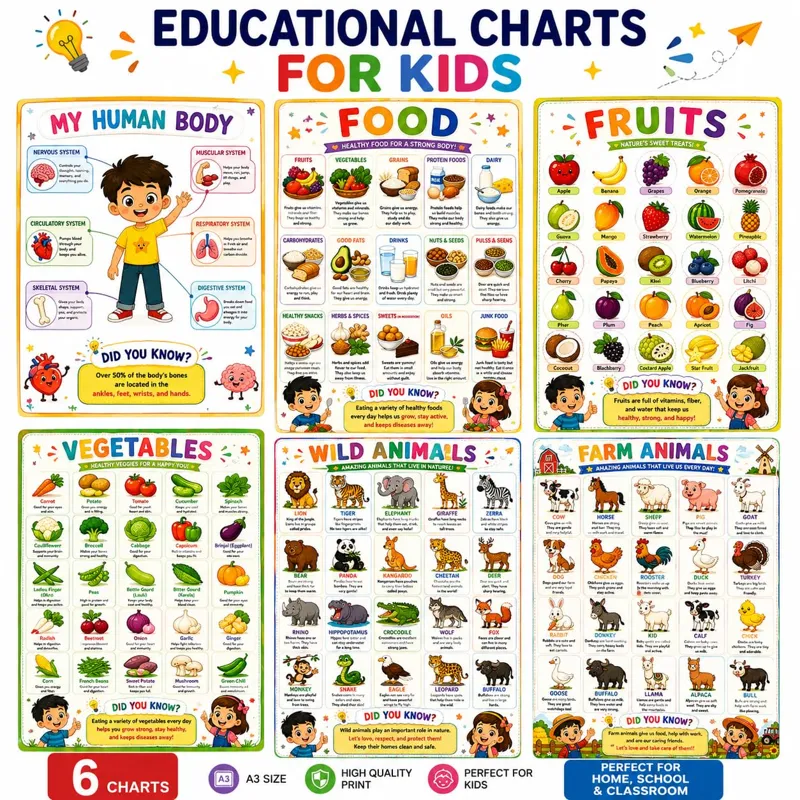 Room decor
How to Decorate a Kids' Room Wall with Learning Charts (Without the Clutter)
Practical ideas to turn a kids' room or study corner into a learning wall – where to hang charts, how many to use, framing vs. unframed, and safe ways to put them up.
Read article →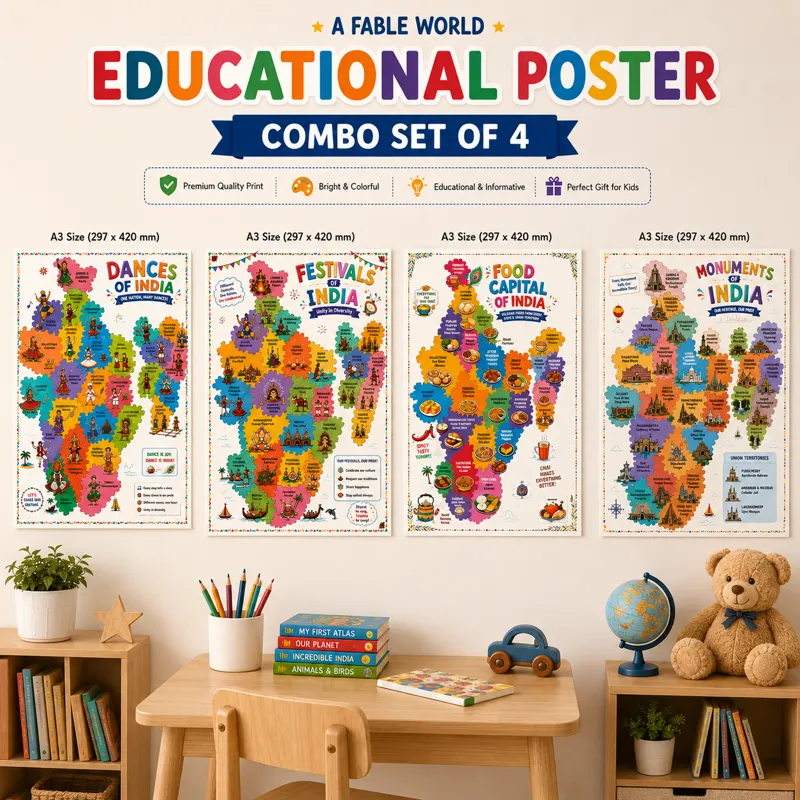 School & projects
India Map Posters for School Projects: Ideas and Tips
Using India map posters for school projects – project ideas on states, dances, festivals, food and monuments, plus tips for display.
Read article →